



Building software is easy now. Fitting it into your business isn't.
A spreadsheet
Built four years ago by somebody who has since left.
An inbox
The quote, the approval and the change of plan, all still sitting.
A group chat
Where the decisions get made, and where they stay.
One person's head
The one who knows how it fits, and who would like a holiday.
From Tuesday's call
Renewal letter, 4% uplift, terrace held as the weather backup
It drafts, you decide.
A short call to see if it's a fit. Nothing is billed before there's a signed scope.
Who it's for
Every team has a job it still does by hand
Here's where the week usually goes, and the kind of thing that takes it back. None of these is a platform. Each one is a small tool built for one job, and most land in days rather than months.
Sales
Half the week goes on writing calls up and rebuilding the same quote. The call already holds most of what the quote needs.
- Call transcript analysis
- ROI calculator
- Quote builder
- Follow-up drafts
Operations
The process works. It just lives in somebody's head, so the handover happens twice and the renewal date is a note in a calendar.
- Handover documents
- Renewal tracking
- Job scheduling
- Site checklists
Finance and admin
The invoice waits on somebody remembering the job finished, then gets typed out of a job sheet that already has every number on it.
- Invoice generation
- Spend against budget
- Chase-up reminders
- Expense capture
Client service
Somebody promised something on a call in March. Finding out what, and to whom, means reading four threads and hoping.
- Commitment tracking
- Reply drafting
- Request triage
- Account timelines
Marketing
The numbers live in five dashboards and the monthly report is somebody copying them into a slide by hand, again.
- One reporting dashboard
- Post drafting
- Content calendar
- Search performance
People and hiring
Every new starter gets a slightly different first week, because the last one's checklist was a message somebody sent in a hurry.
- Onboarding checklists
- Interview scorecards
- Policy Q&A
- Time-off tracking
Most clients start with one of these, not six. If you're a team of three wearing all of these hats at once, that's normal, and the first call is about working out which one is costing you the most.
The problem
Your process already works. It just doesn't live anywhere
That is the part the platform vendors miss. The way you run is usually fine. What it lacks is somewhere to be, so it ends up split across four places and held together by somebody's memory.
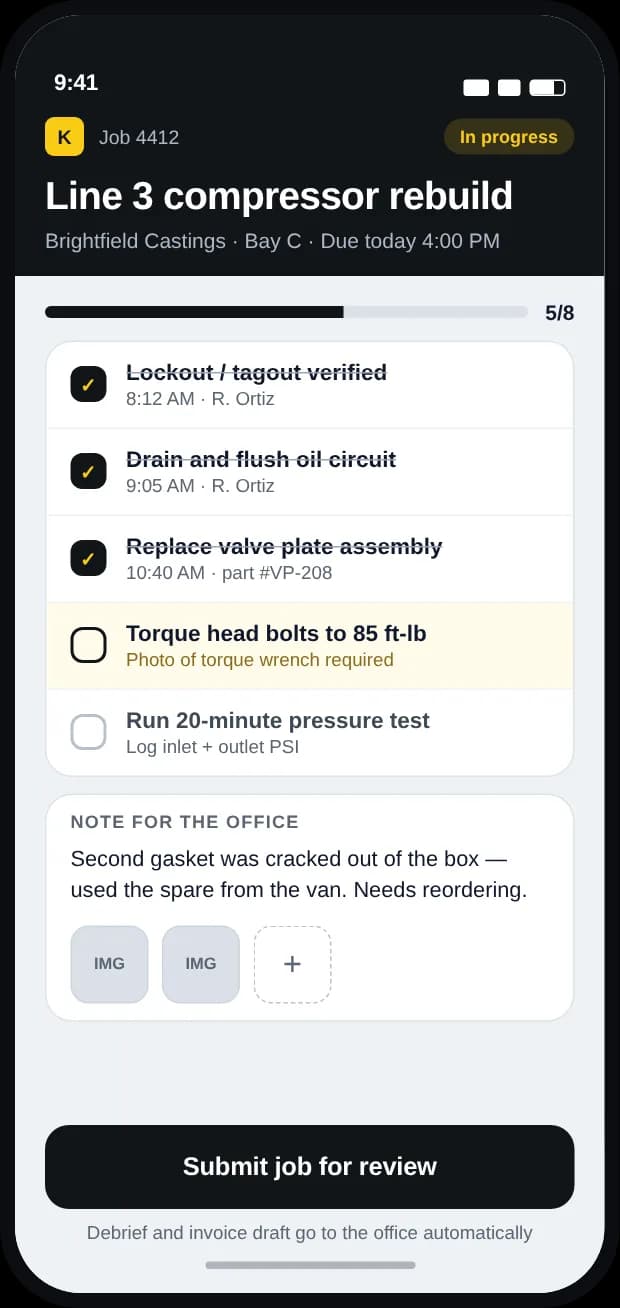
One signed-in place
The hub on the right is a demonstration, not client work. Every organization, person and number in it is invented.
So the answer isn't more software. A platform turns up with its own idea of how the work should go, and the distance between that idea and the way you actually run is the part your team covers by hand. Every workaround in the building started there.
What's missing is somewhere for the process to live that is built to the shape of the process. Your own stages, your own words for them, with the exceptions included rather than designed out.
Why now
You now have access to Custom Enterprise Software
Building software used to be the hard part
Two years ago a custom tool meant a six-figure budget, a development firm and a nine-month calendar. Most small businesses did that arithmetic once and went back to the spreadsheet. That arithmetic is gone.
Marco Argenti, the chief information officer of Goldman Sachs, told Bloomberg's Odd Lots in March that the buy-versus-build equation "has changed quite a bit." His engineers now turn up having built a working application in their spare time that week.
Not a startup founder. The CIO of a bank founded in 1869.
The largest companies in the world already moved
Goldman has since ended contracts with outside software vendors, having replaced what they did with tools built in-house. Walmart built its own platform for associates to work with AI and now runs four agent platforms across the business. At McKinsey, 92% of staff have used Lilli, the platform the firm built for itself, and 74% are on it regularly.
Here is what every one of them had that you don't: people who understood the business well enough to know what to build. You can buy the same tools Goldman uses, today, for about what a phone plan costs. What Goldman had was analysts who could look at a workflow and say this step right here is where we lose four days.
That is the thing that used to be out of reach for a thirty-person company. Not the technology. The technology was never the hard part.
Knowing what to build still is
Skip that step and it goes one of two ways. Either nothing gets built, because nobody in the building can see where the tools would fit. Or something gets built quickly and understood late, which is why there is now a repair trade charging premium rates to fix software that shipped before anyone asked what it was for.
Fast building without clear thinking doesn't get you a good answer quickly. It gets you to the wrong answer quickly.
Anyone can build an app now. The hard part is knowing what to build.
That is the whole job. The first part of every engagement is spent inside your business, watching the work and asking the unglamorous questions, until the step where four days go missing turns up. Then we build. In that order, always.
See how it worksSources: Bloomberg Odd Lots, Goldman CIO Marco Argenti on the Warp-Speed Improvements in AI, 30 March 2026 · CIO Dive, Why Walmart is rolling out AI to 2M employees, April 2026 · McKinsey and Company, on Lilli.
AI inside it
The documents write their own first draft
Every organization writes the same handful of things over and over, and assembles each one by hand from information it already holds. A hub knows what it holds. So the quote comes from the site visit, the funder report comes from the numbers already captured, and the follow-up comes from the meeting it came out of.
- Quotes, proposals, reports, follow-ups, handover notes
- Drawn from the records and conversations already in the hub
- It drafts, you decide, and nothing leaves without you
On your stack
It connects what you already pay for
Your calendar stays your calendar. The files stay in the drive you are already paying for. A hub sits on top of the tools you have rather than asking you to migrate off them, so it is useful in week one instead of week nine.
- Calendar, mail, files, accounting, whatever you already run
- No per-seat pricing and no licences resold to you at a margin
- The accounts stay in your name
Whatever your team already runs, in whatever combination. The hub reads from it and writes back to it.
While it's being built
You watch it get built
Custom software usually goes quiet the moment the contract is signed, and the client finds out how it went at the end. Yours doesn't. From the day we start you have a dashboard: what's done, what I'm on, what's next, and somewhere to ask a question that isn't a buried email thread.
- Milestones with real states, updated as they move
- Working pieces to try before the whole thing lands
- One place to ask, and to see what you already asked
Latest update
Quote drafting is ready for you to try on two real jobs. Anything reading wrong, tell me here.
Use cases
Four hubs, four different shapes
A property manager and a machine shop do not want the same screen. Layout, density and how loudly the AI announces itself all change with the work. Nine screens from four builds turn past here, and they are the kind of thing I walk through on the second call.
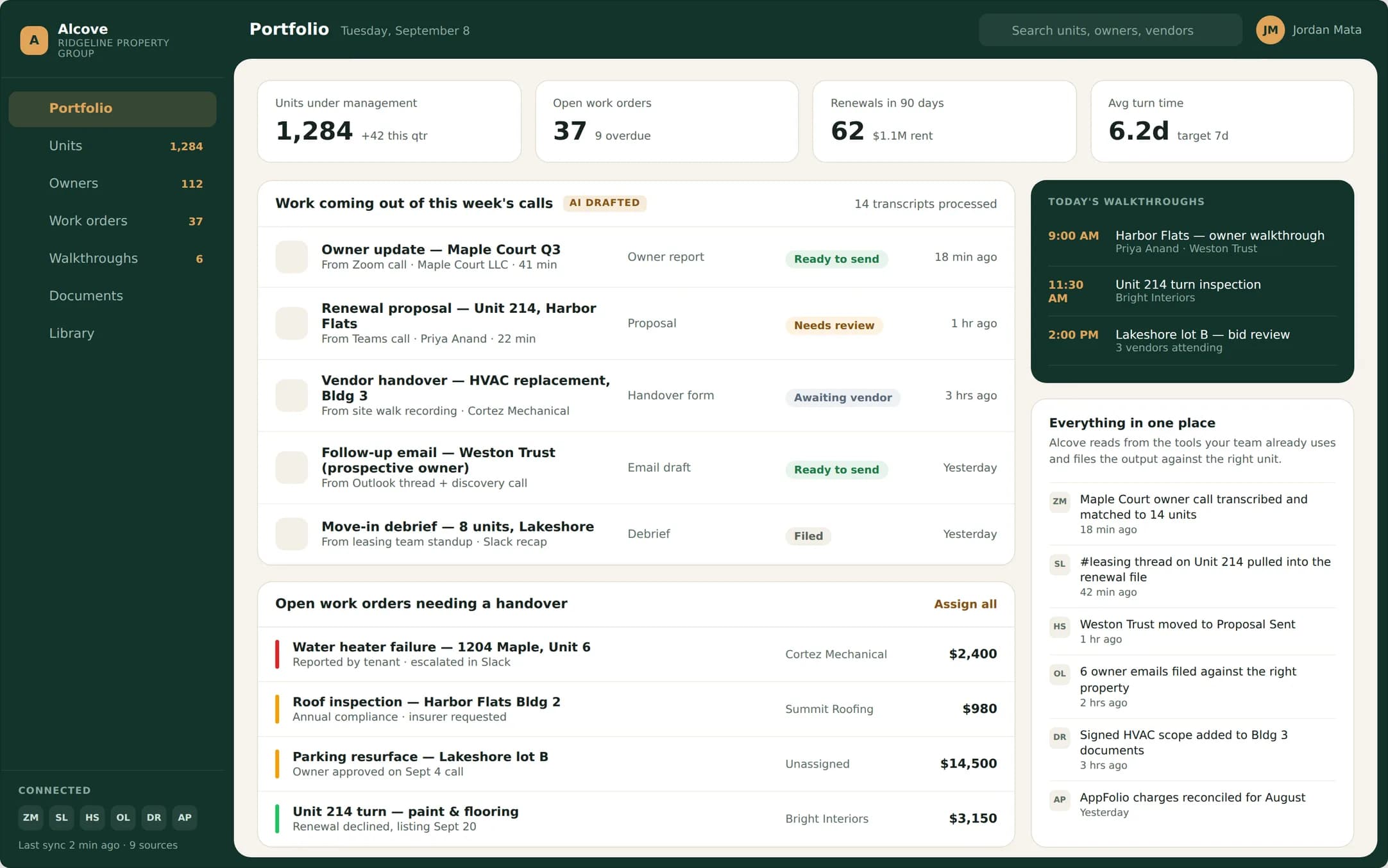
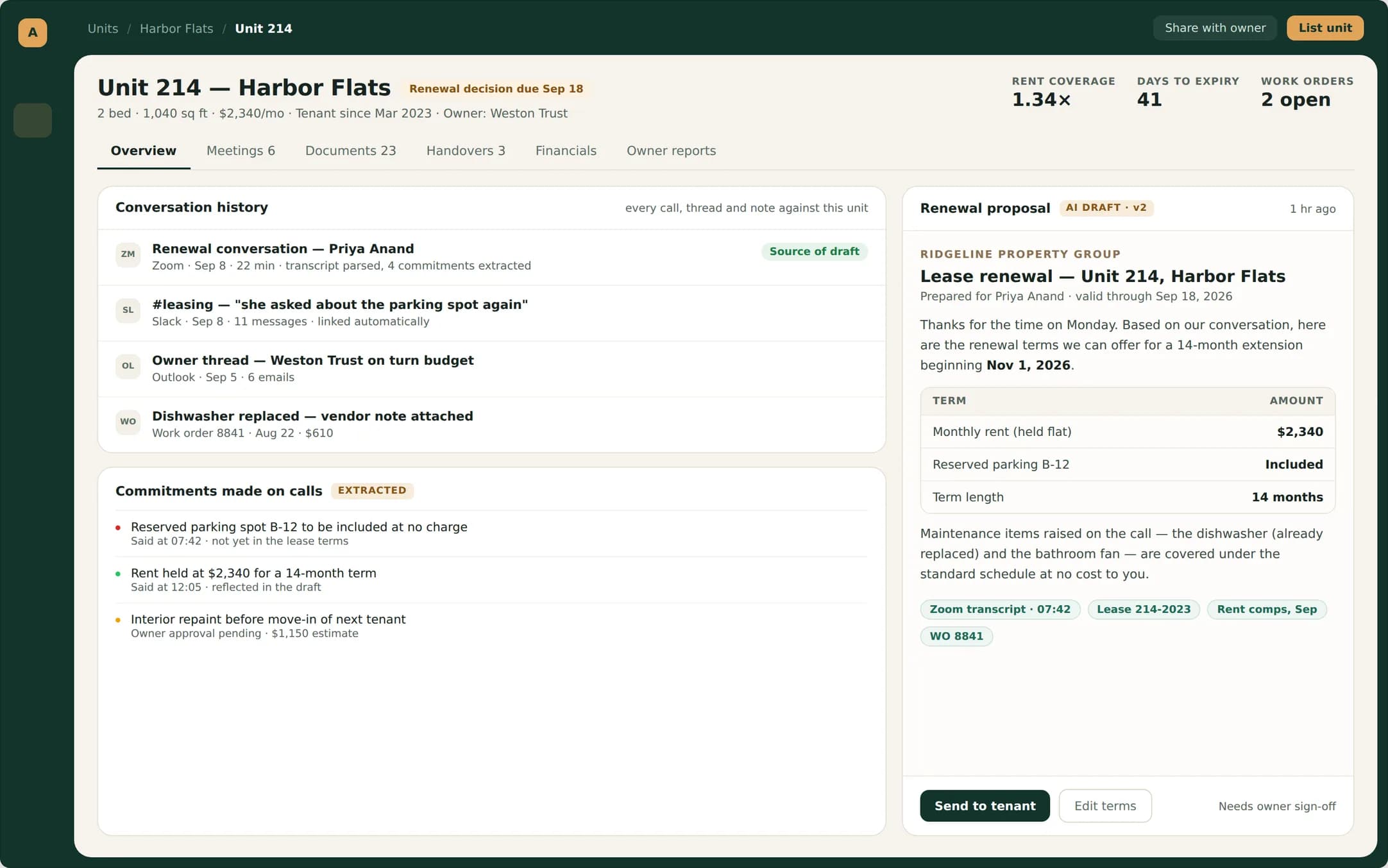
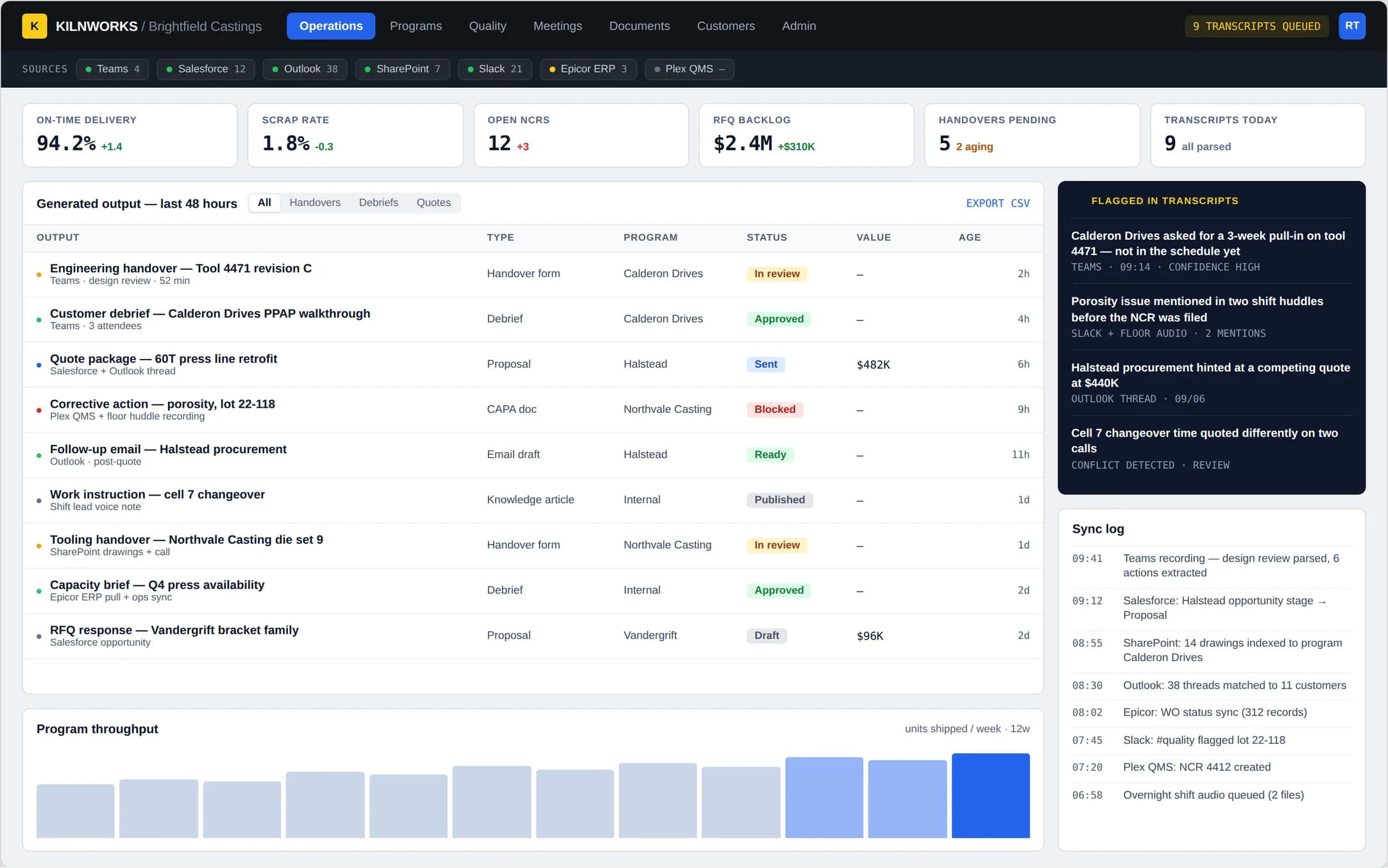
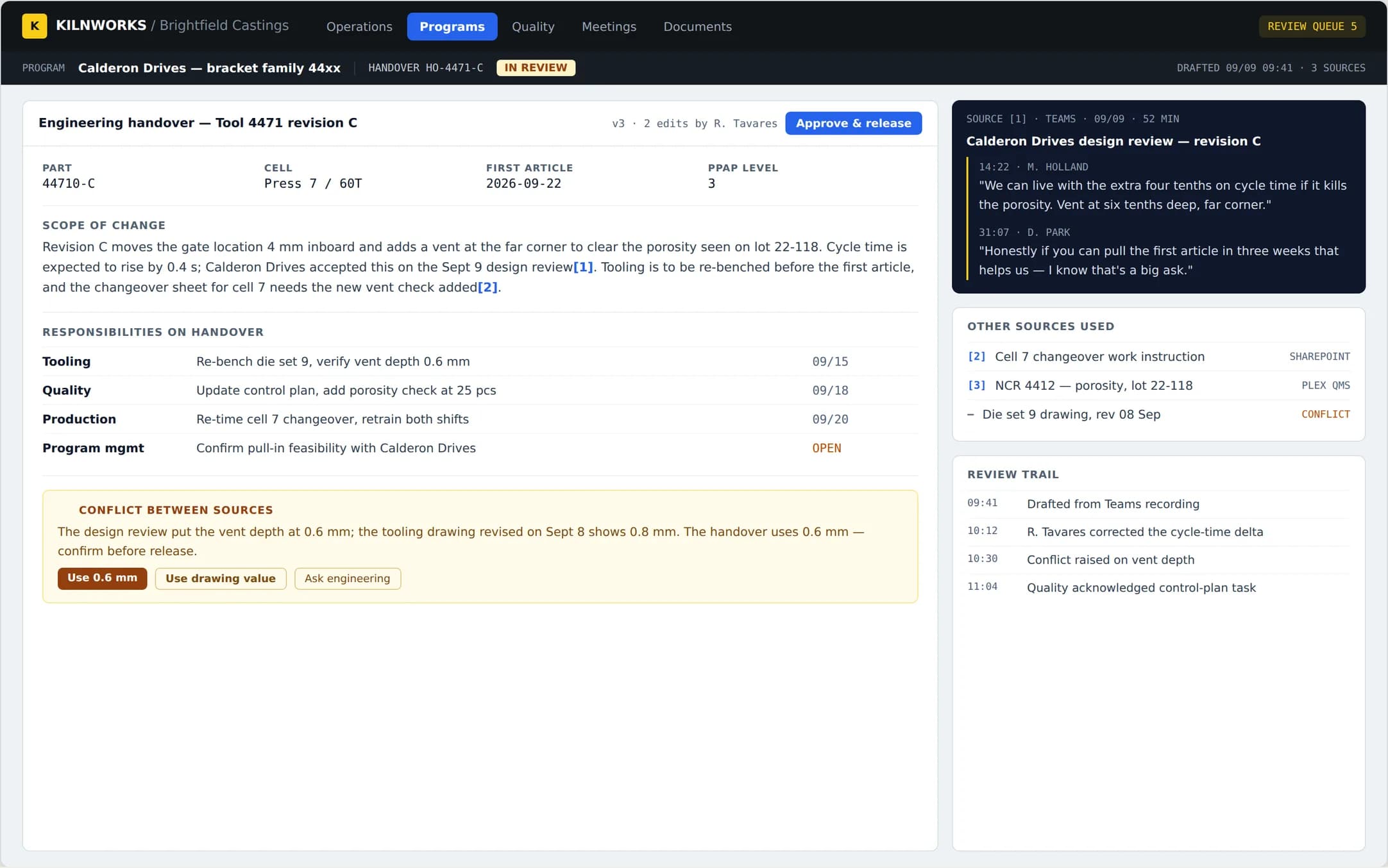
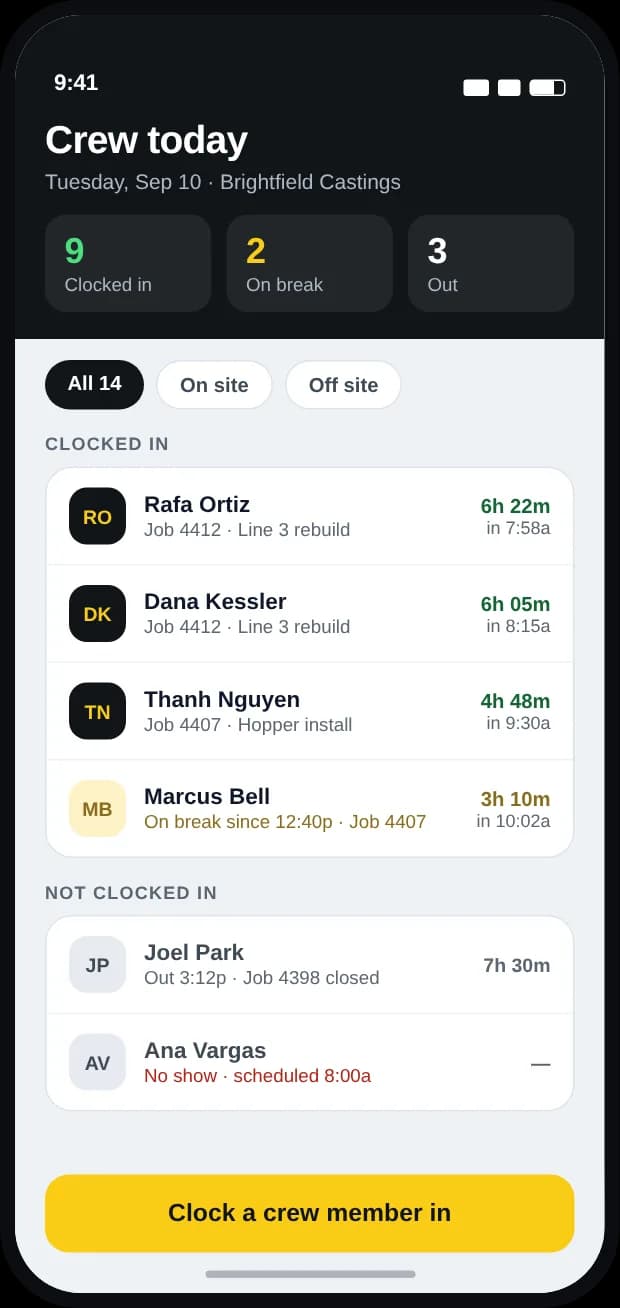
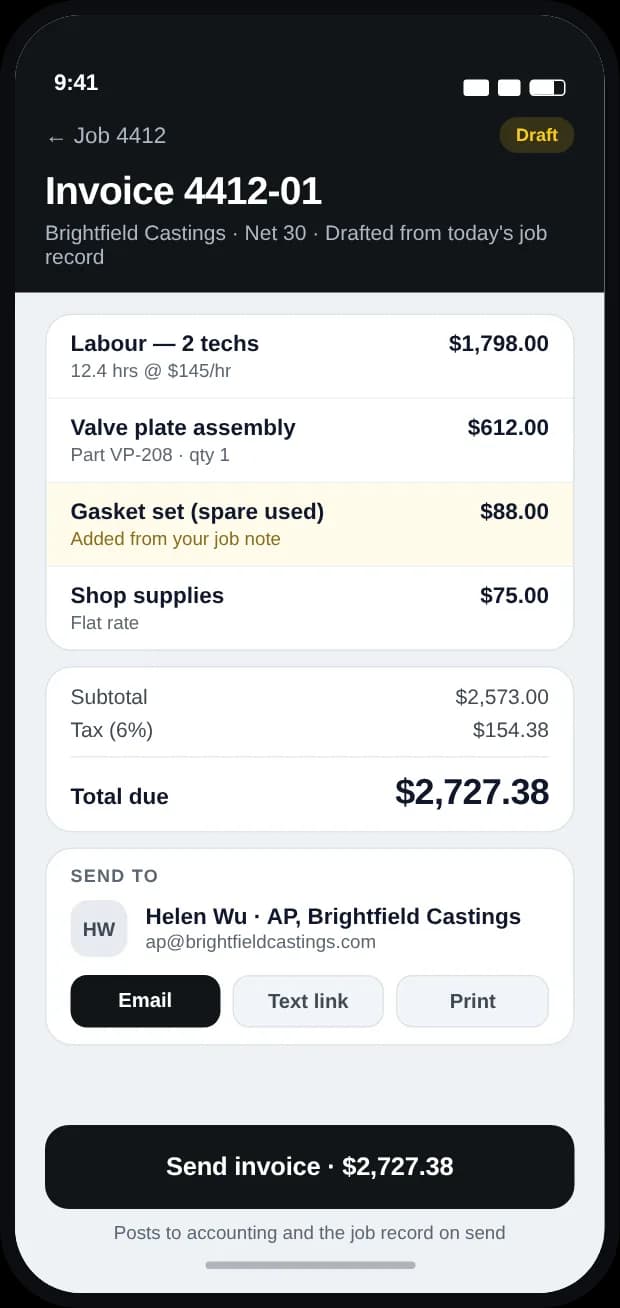
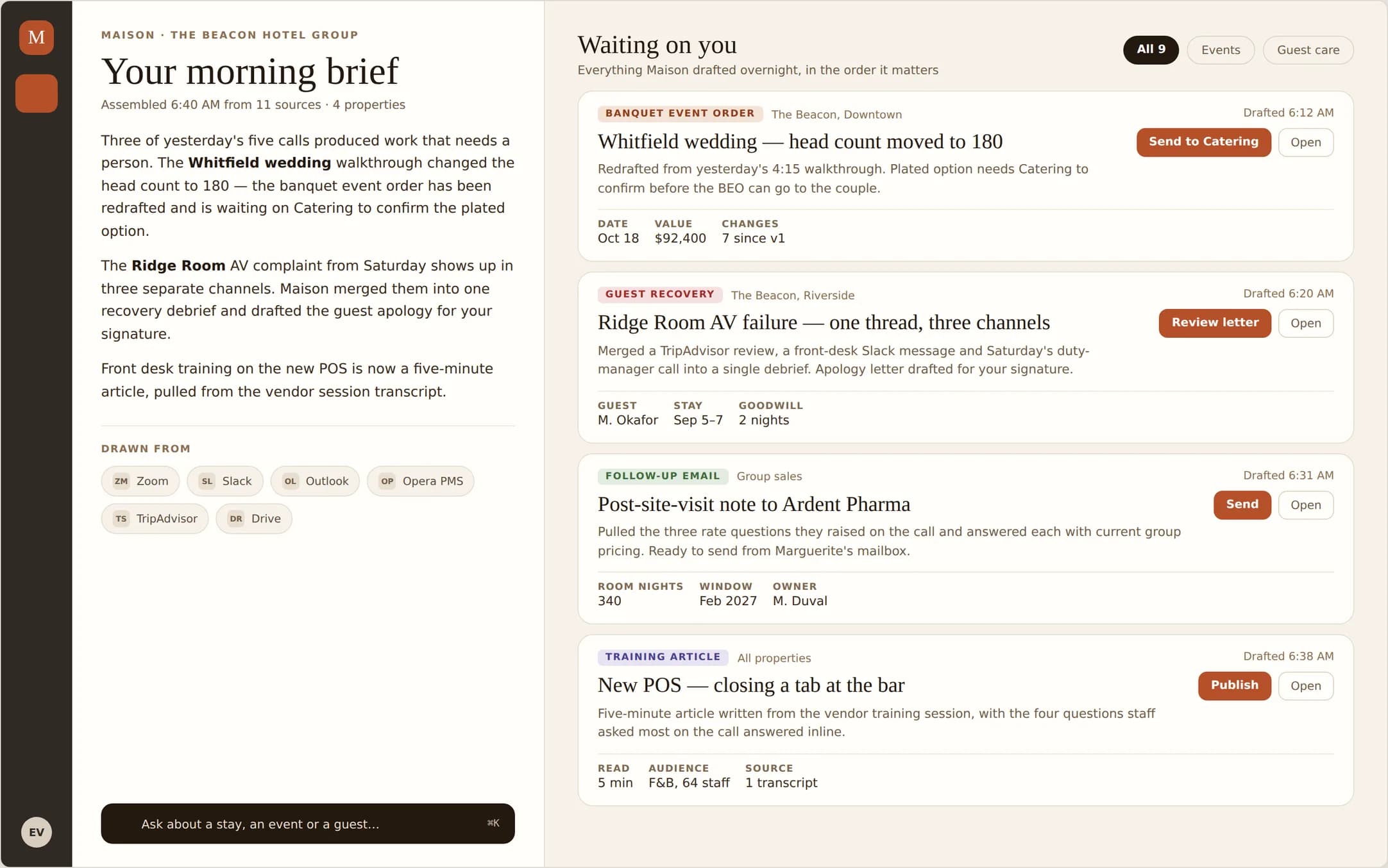
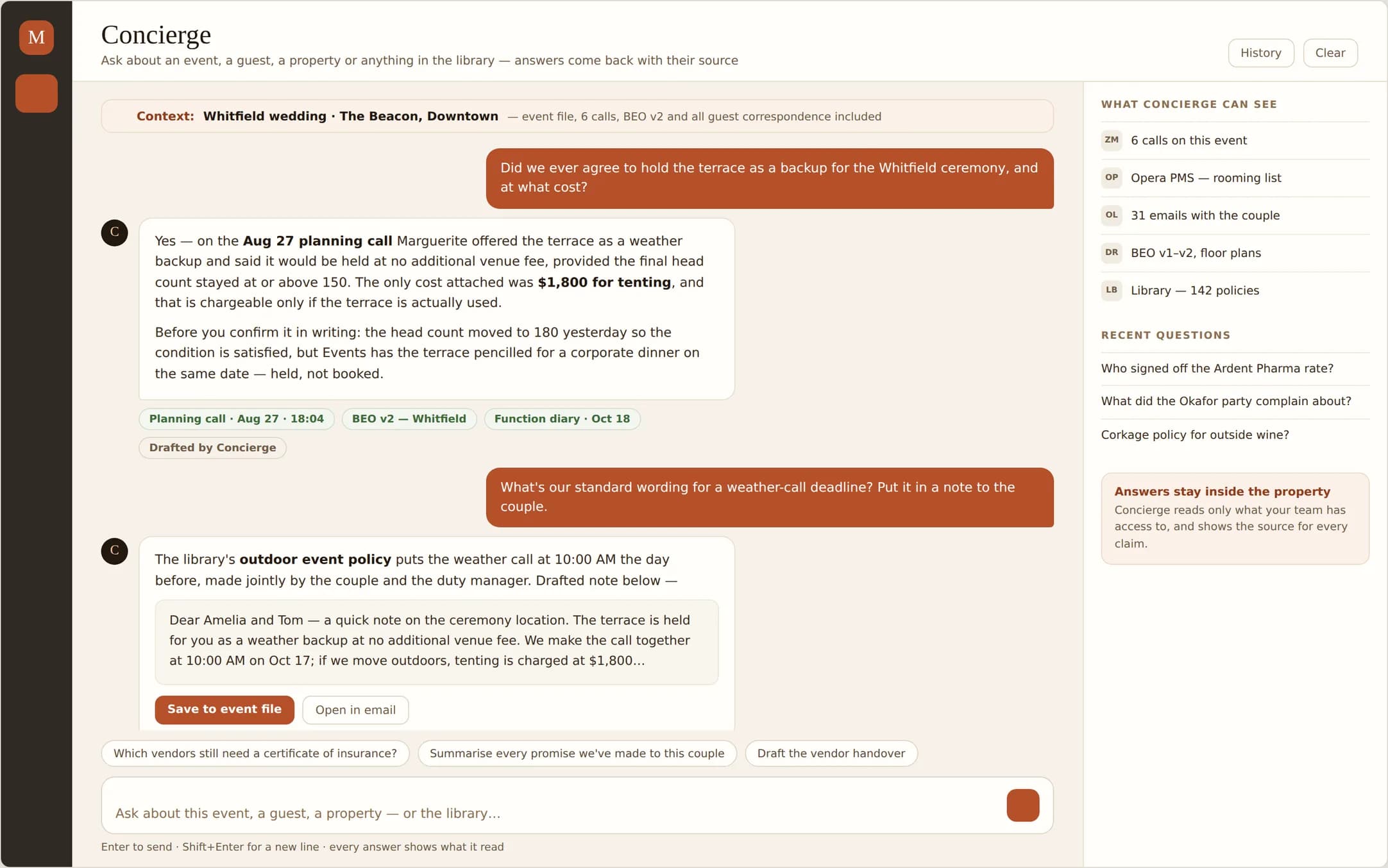
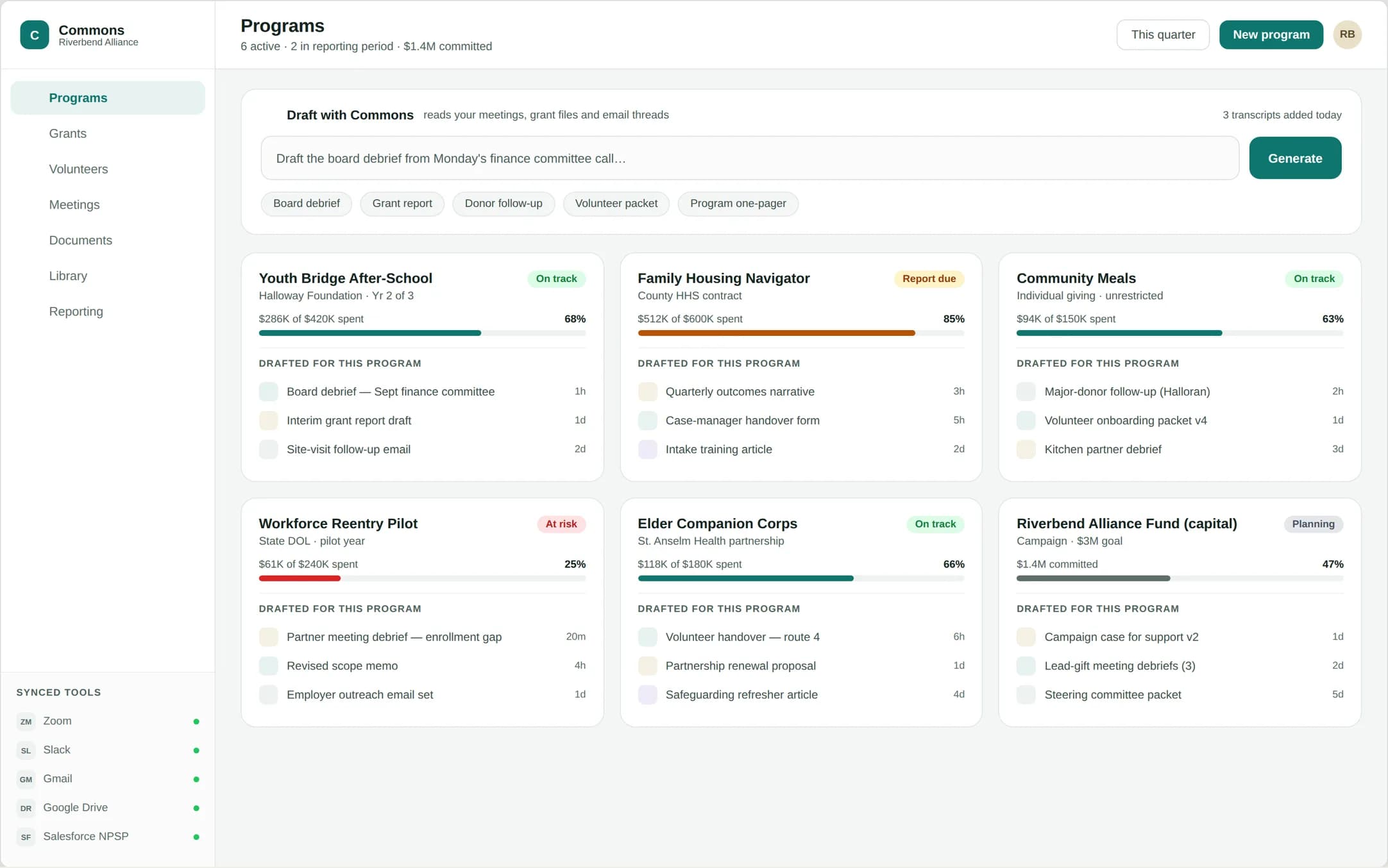
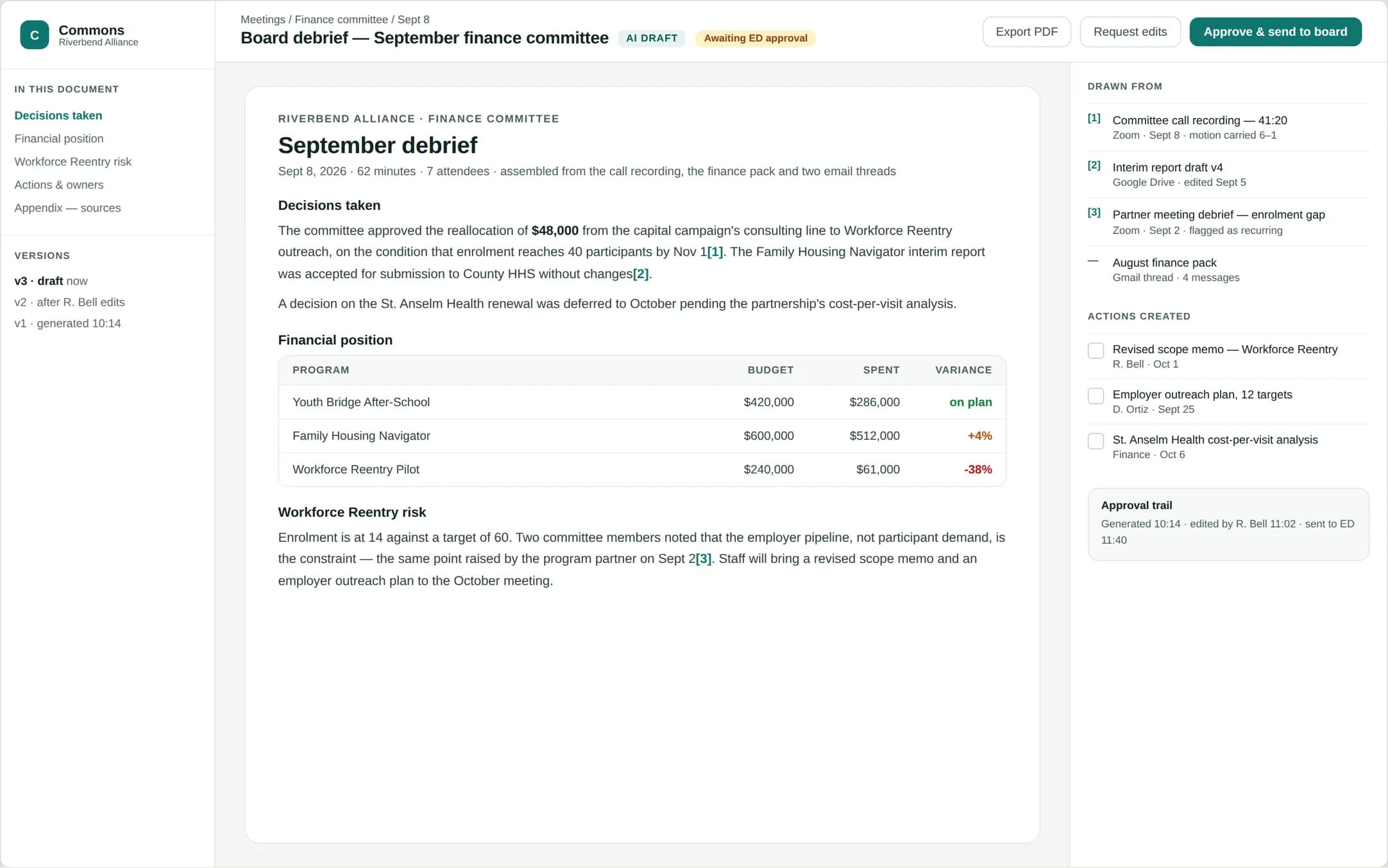
Property management · Portfolio overview
Property management, Portfolio overview. Screen 1 of 9.
These are demonstrations, not client work. No client's screen and no client's data appears on this page, and every organization, person and number in them is invented. When there's a client happy to be named, their hub replaces one of these.
How it works
Three conversations, then a mock-up you can actually look at
Nobody should buy custom software off a description of it. So you see the thing built for your process, with its price, before you decide anything.
An introductory call
Short, and about whether this is a fit at all. If the kind of thing I build wouldn't help, I'll say so on that call.
Discovery
A proper look at how the work moves today and where it snags, with hubs built for situations like yours to point at.
Your mock-up, and the price
This is where pricing happens
A working mock-up of the actual solution, for your process, with the quote beside it. You see it before you decide whether to pay for it.
Scope and signature
What's in, what's explicitly out, and what finished means. Fixed price against that scope, and change orders in writing.
The build, in the open
Milestones and their states, pieces to try as they land, and a place to ask. You own what's built and the accounts it runs on.
Nothing is billed before there is a signed scope. The first three conversations, and the mock-up that comes out of them, cost you time and nothing else.
Small businesses are being left behind
<20%
of firms with four or fewer employees report using AI, as of May 2026
37%
of firms with 250 or more employees do report using AI
82%
of the smallest firms with no plans to adopt say AI doesn't seem to apply to their business
74%
of small businesses trying AI say clearer proof of return would get them to commit
Sources: U.S. Census Bureau Business Trends and Outlook Survey, May 2026 · SBA Office of Advocacy, September 2025 · Reimagine Main Street / PayPal AI and Small Business Survey, June 2025.
Who you'd be working with
Nick Griffith MBA, SHRM-CP, CSE

I've spent seven years in tech as a solutions consultant and product owner. Most of it was sitting across a table from people who run businesses, working out what software could and couldn't do for them. No jargon, no overselling.
I build these too. Treenix runs on one: enquiries arrive from the site and other channels, get worked through their stages, and what went out on social is recorded next to the code that serves this page. I've built one for a volunteer youth organization as well, where everybody on the committee is unpaid and the software budget is nothing. That constraint teaches you what a tool really needs.
I look at the challenge first and the technology second. The question is never how to get you using AI. It's what's costing you time and money, and whether AI belongs in the answer at all.
Sometimes the right answer is a simple tool to fill a gap, not a complete overhaul.
Purdue University
B.S. in Business Management, focused on process improvement and innovation.
Butler University
MBA concentrated in Leadership.
SHRM-CP
Certified Professional, Society for Human Resource Management. The people side of the processes automation tends to touch.
Certified Sales Engineer (CSE)
Awarded by NAASE, the North American Association of Sales Engineers.


Questions
The things people ask first
If yours isn't here, put it in the form and I'll answer it properly.
When do I find out what it costs?
On the third conversation, alongside a working mock-up of the thing you would be buying. It is a fixed quote against a defined scope, not an hourly rate and not a range. Quoting before that would be guessing, and you would have nothing to judge the number against.
Do I pay for the mock-up?
No. The introductory call, the discovery, and the mock-up that comes out of them cost you time and nothing else. Nothing is billed before there is a signed statement of work.
Can I see something you've already built?
Yes, on the discovery call. It is much easier to point at a hub built for a situation like yours and say what is close and what is wrong than to describe software you have not seen.
How long does it take?
The three conversations usually run over a couple of weeks, depending on how quickly we can get people in a room. A build depends entirely on scope, and the statement of work names the milestones and dates before you sign it.
What if AI isn't the right answer?
Then I'll tell you, and I would rather tell you on the first call than after you have paid for something. Plenty of problems are solved by changing a step, deleting a form, or an automation that costs a few dollars a month.
Who owns what gets built?
You do. The code, the data and the accounts are in your name from the start. If you and I stop working together, nothing switches off and nobody is locked out.
What happens to my data?
It stays in accounts you hold. A hub reads what it needs to do its job and writes back where you tell it to. Anything sensitive is named in the scope, in writing, before it is touched.
I already have software. Is this instead of that?
Usually not. Most hubs sit on top of what a client already runs and fill the gap where somebody was doing the work by hand. If your existing tools would do the job with better setup, that is a cheaper answer and I'll point at it.
Start here
Tell me where the work snags
A sentence or two about what keeps costing you time is plenty. The first call is short and it is about whether this is a fit, not a pitch.
You don't need to know whether you want a hub, an automation, or nothing at all. Working that out is my job, and you'll see the answer as a mock-up before you pay for anything.